Mark your calendars! It’s once again time to book flu/Covid respiratory season shots.
Public health will host more than 70 immunization clinics in 42 different communities across the region this year. This year’s seasonal influenza campaign will start on Oct. 15 and continue through to Nov. 30.
“This is a time of the year where respiratory and non-respiratory viruses start impacting our health and the health of our family. Immunizations remain the cornerstone of infectious disease control and prevention in our province,” says Interlake-Eastern Regional Health Authority regional medical officer of health Dr. Tim Hilderman.
Seasonal influenza, pneumococcal 20 and COVID-19 vaccine will be available for those eligible as per Manitoba Health guidelines. Immunization with the most updated COVID-19 vaccine is strongly recommended for previously vaccinated and unvaccinated individuals at increased risk of COVID-19 infection or severe disease.
Book an appointment by calling 1-844-626-8222 between 9:00am and 5:00pm, Monday to Friday or by using the online booking system found at Immunization Clinics (ierha.ca)
Please note:
Bring your Manitoba Health Card and wear a short-sleeved shirt.
Some walk-in appointments available. Please see the online vaccine provider map on Immunization Clinics (ierha.ca) for walk-in details.
Please practice good hand-washing.
Do not come to your appointment if you are experiencing flu-like symptoms.
Please come right at your appointment time to avoid congestion.
Immunizations are already being offered to clients and families in personal care homes across the region. Roll-out of the immunizations to home care clients and family will commence this week.
Interlake-Eastern RHA annual general meeting attracts over 110 participants
Interlake-Eastern Regional Health Authority’s virtual annual general meeting on Oct. 7 saw more than 110 staff and community members login virtually to hear the region’s planned activities and a summary of the past year.
Cyndi Typliski, vice chair of the board of directors, was the master of ceremonies. The meeting opened with a prayer from Ferdinand Funk, spiritual care coordinator for the region.
Board chair Michele Polinuk talked about the region’s population and demographics. She noted the cultural diversity that is historically part of the region and that continues to shape it today with the arrival of newcomers. In addition to reviewing the board’s governance structure and priorities of the board this year, she also announced the four winning staff members of the Chair’s Award for Excellence in Customer Service.
“Staff members submitted 22 outstanding nominations this year and every one of these people reflects the culture we are building in this organization,” Polinuk said.
To the winners Polinuk said, “How you choose to show up to work, what you bring to your workplace, and how you make the people around you feel good is inspiring to us all!”
She recognized the following staff members:
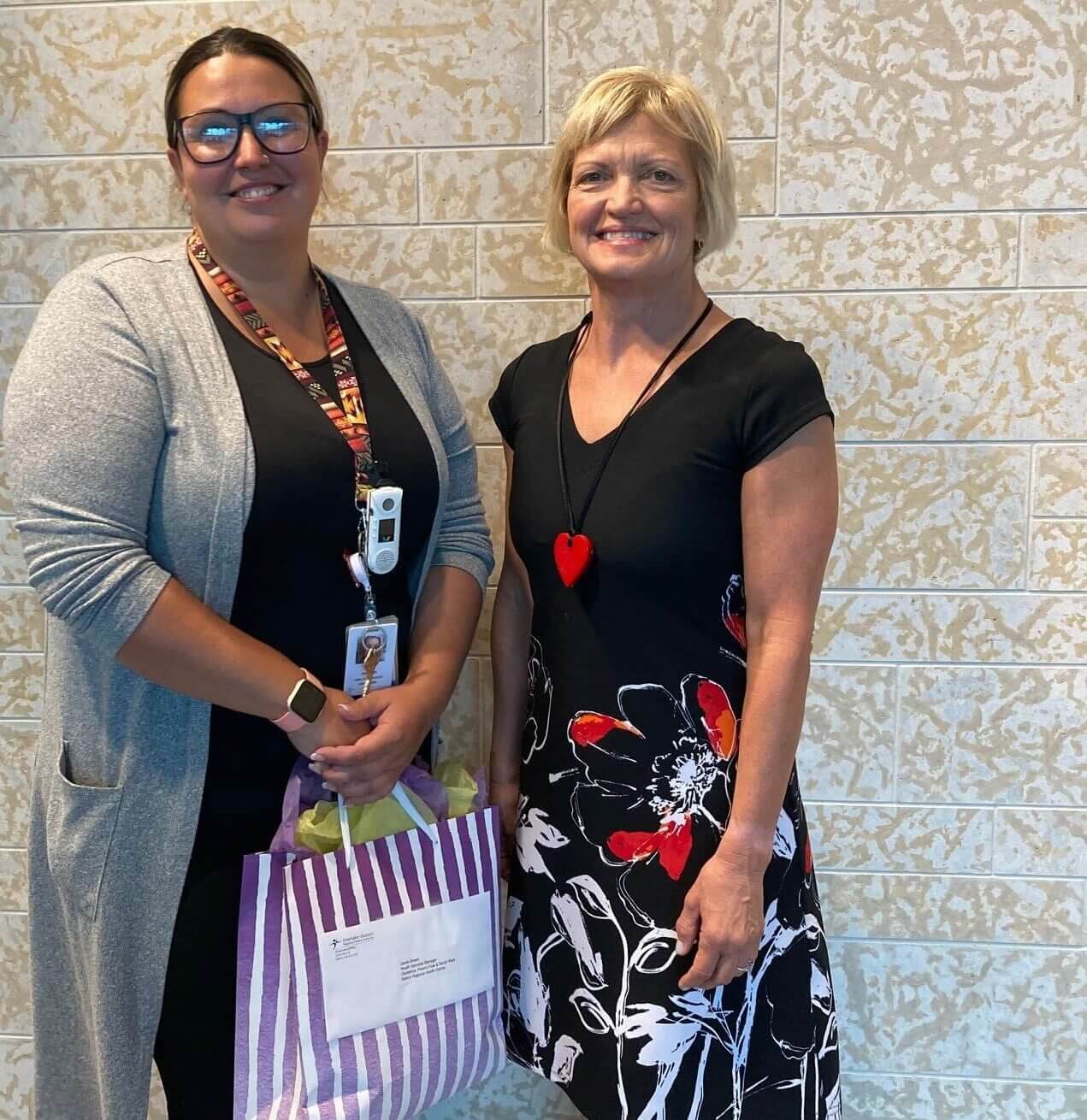
Jamie Brown, Selkirk Regional Health Centre’s health services manager for obstetrics, patient flow and social work. Jamie always takes the lead in complex obstetrical situations and makes sure staff feel supported and that patients receive the best care and advocacy possible.
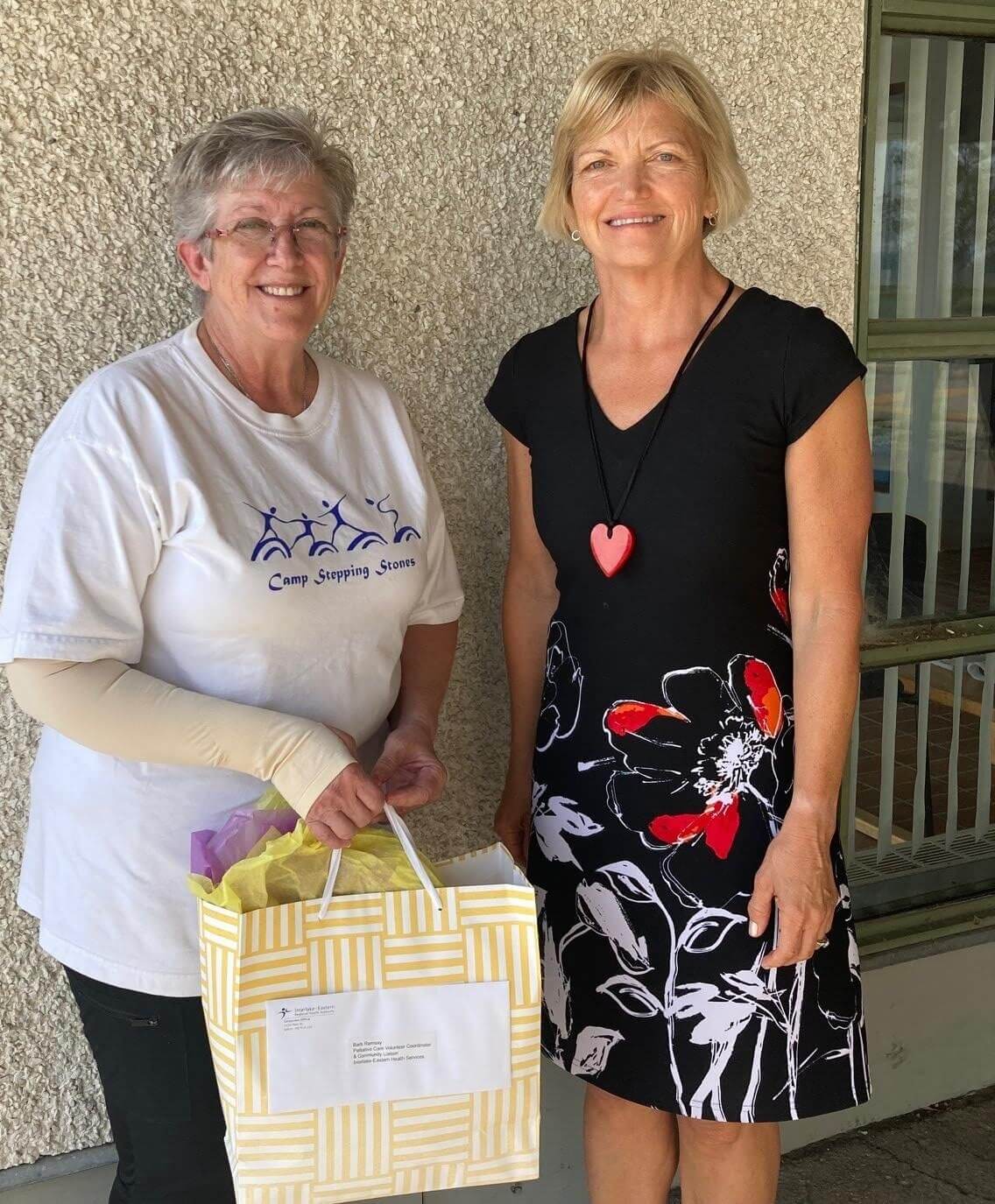
Barb Ramsay, palliative care volunteer coordinator exemplifies the values of the health authority through her work in leading Camp Stepping Stones, the region’s grief camp for children who have experienced the death of a loved one. Her impact is evident in the standing ovation she received at the end of the weekend.
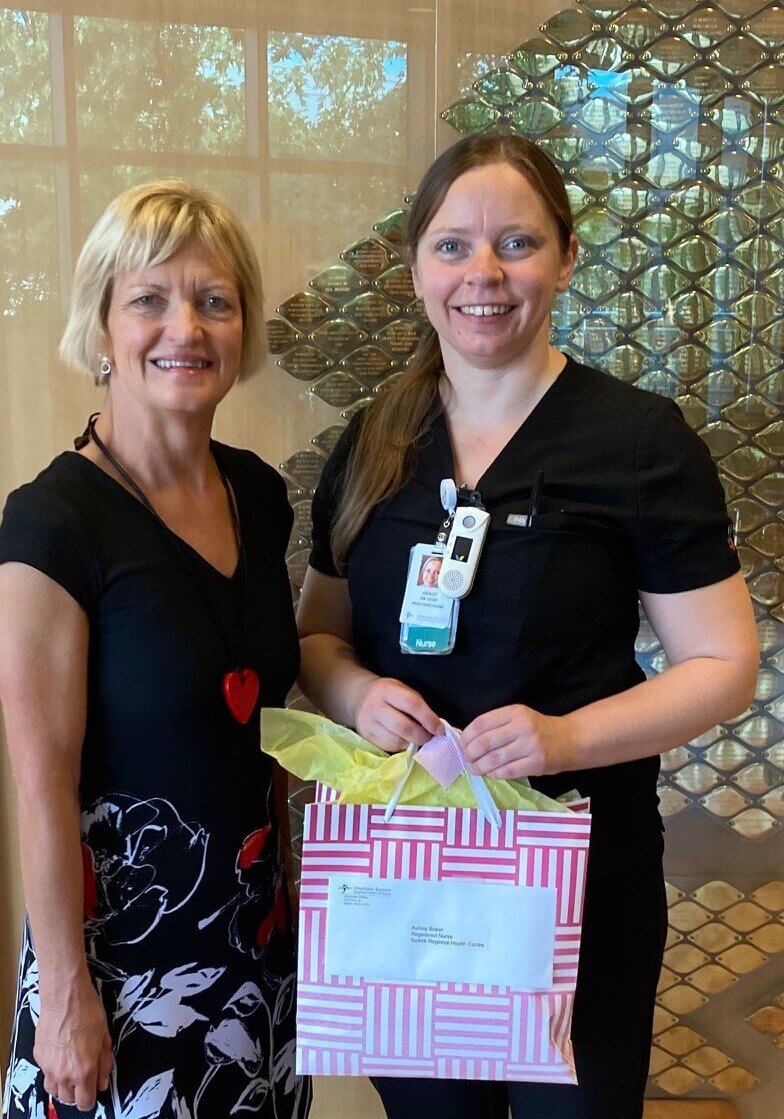
Ashley Braun, registered nurse at Selkirk Regional Health Centre was recognized for providing compassionate, competent patient care while using her critical thinking to investigate patient care plans. Her collaborative approach to work with other staff members helps move patients to discharge home.
Housekeeping aide Karen Schreyer stands out for her profound impact on both residents and peers in Fisher Personal Care Home. She consistently demonstrates a deep understanding of support services needs and addresses them with both compassion and efficiency, making her a true asset to the region’s health team.
Chief executive officer, Marion Ellis, provided a review of the region’s work and she was joined by the RHA’s executive lead, human resources Julene Sawatzky to provide an overview of the region’s successful training and recruitment initiatives.
Receiving the CEO Award for Community Leadership was Yvonne Oxer, a registered nurse who invested more than 50 years working in the health region. She suspended her retirement to help Interlake-Eastern Regional Health Authority open its first transitional care unit. This new unit in Selkirk prepares people for their return home or for a move to a new place of residence.
“Yvonne jumped in and really worked with the team,” Ellis said adding that the unit Oxer was instrumental in establishing is helping patients from all over the region receive appropriate care.
Other speakers included Dr. Tim Hilderman, medical officer of health for Interlake-Eastern RHA who addressed the role of vaccinations as a cornerstone of infectious disease control. Presenting the finance report were Murray Werbeniuk, chair of the finance committee of the board, and Lorianne Kowaliszyn, IERHA’s executive lead of corporate services and chief financial officer.
A recording of IERHA’s AGM and the IERHA 2023-2024 Annual Report document can be accessed at www.ierha.ca under “About us” and “Annual General Meeting”.
Chair’s Award winner, Jamie Brown, health services manager
Chair’s Award, Barb Ramsay, palliative care coordinator
Chair’s Award winner, Ashley Braun, registered nurse
Chair’s Award winner, Karen Schreyer, housekeeping aide
Tentative agreement reached with CUPE and MGEU
We are pleased to share that a tentative agreement has been reached with both CUPE and MGEU. This means that the anticipated work stoppage scheduled to begin earlier today will not occur at this time.
Work to resume normal operations and reschedule affected appointments will occur over the coming days. For most patients, residents and clients, health-care services will continue as planned today.
Some disruption can still be expected for patients and clients whose appointments and surgeries may have been postponed in anticipation of a work stoppage.
If you have been affected by a change in service or some other disruption to your scheduled health services, you can expect to be contacted directly with an update or a rescheduled appointment.
We are working with our teams to support a smooth return to normal operations and appreciate your ongoing understanding as our dedicated staff do their best to support the care of all patients, residents and clients.
We recognize the planning work for a potential work stoppage has been disruptive. We thank you for your understanding.
Located at: Selkirk Crossing Across from Boston Pizza #3-1020 Manitoba Avenue
The Selkirk QuickCare Clinic provides same day services by appointment. You can call for an appointment starting at 9:30 am. To book your same day appointment, call 204-482-4399.
9:30am – 4:30pm, weekends and holidays (closed for lunch, Noon – 1:00pm)*
Phone: 204-389-3649 to make an appointment.
Grand Marais Primary Health Care Clinic
Located at: Grand Marais Community Central & RV Park (36058, PTH 12)
EXTENDED HOURS:
9:00am to 4:00pm on weekends and holidays. Walk-ins welcome during extended hours. On weekends and holidays only call 204-754-8372 (phones not monitored on weekdays)*
*Hours are subject to change. For the latest hours, please visit: Find Usand select “Clinics.”
Ashern Lakeshore General Hospital now accepting Indigenous Artist Proposals for Mural
The construction of the new state of the art Ashern Lakeshore General Hospital 26 private room inpatient unit expansion is on track for targeted completion at the end of the year with the first patients seen in the new wing sometime in February 2025.
As part of this expansion project, a new room for patients and visitors to gather called “All Are Relations” is being added. This room has a wall for a mural that will provide a welcoming environment for patients and their families.
“One of the ways people can feel at ease in health care facilities is through surroundings that represent who they are,” says Interlake-Eastern Regional Health Authority Indigenous health lead Adam Sanderson. “It is hoped that the feature wall at Ashern’s Lakeshore General Hospital will reflect local communities, the place of spirituality in the healing journey and be inclusive in its presentation.”
The artwork would need to be approximately 7’ high by 18’ wide and should reflect one or more of the following themes:
24-hour crisis line going temporarily out of service tomorrow at 1:00 p.m.
The 24-hour crisis line (204-482-5419 and 1-866-427-8628) will be out of service (for a short period up to 30 minutes) at 1 p.m. on Wednesday, May 29 while MTS moves the 24 hour crisis line phones to their new location. Users will hear a dial tone, busy signal, or “phone not in service.” This is a result of the move of mental health services from 446 Main St. location to the second floor of the Selkirk Community Health Office at 237 Manitoba Ave, in Selkirk. If you need to access a crisis line during this time, please contact Klinic’s 24-hour crisis line at 1-888-322-3019. We apologize for the inconvenience.
Pride Week 2024
June is here, and it’s time to celebrate love, acceptance, and the beautiful diversity of the 2SLGBTQQIA+ community. The acronym 2SLGBTQQIA+ represents those who are two-spirit, lesbian, gay, bisexual, transgender, queer, questioning, intersex, asexual, and all other sexual orientations and genders.
These terms and acronyms may be used differently by individuals in various ways depending on how they identify and the context. People will also have different understandings of their identity and it is up to individuals to decide what their identity means to them. If you are unsure of how someone identifies, asking which pronouns they use is respectful and good practice.
Pride Month is not just a time for parades and parties—it’s a powerful reminder of the ongoing fight for equality and recognition.
Want to learn how you can support diversity and inclusivity?
May 19-25 is Paramedic Services Week. IERHA acknowledges the paramedics and their team members who are providing life-saving care during medical emergencies every day in our region. Thank you for your service!
Rural Interest Group medical students tour Interlake-Eastern Regional Health Authority
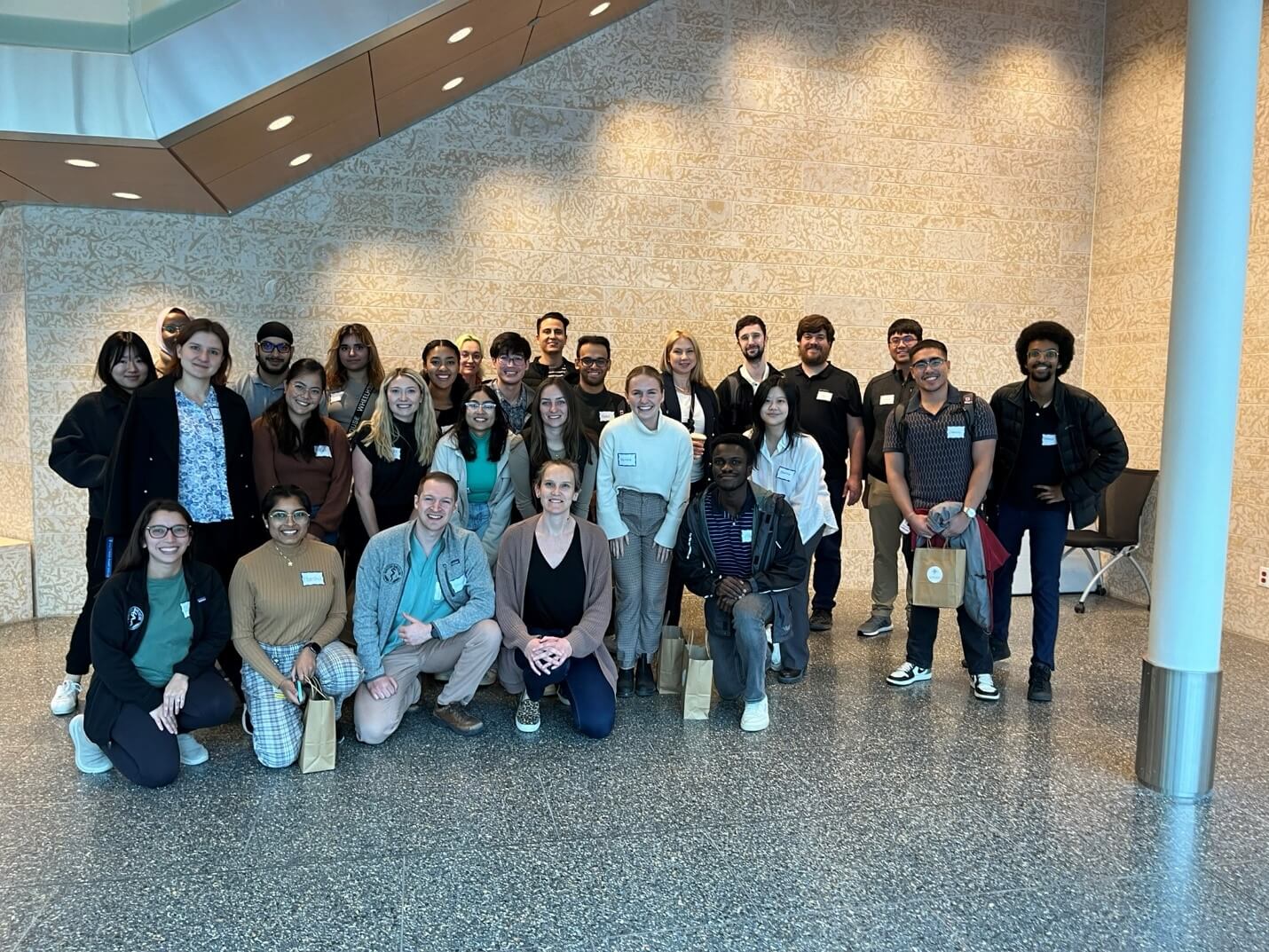
On Friday, May 3, Interlake-Eastern Regional Health Authority (IERHA) welcomed 23 medical students from the University of Manitoba with a meal at Lower Fort Garry National Historic Site.
Interlake-Eastern RHA based physicians, Dr. Ian Alexander (family physician and IERHA’s Regional Family Medicine Specialty Lead), Dr. Stewart Nadurak (IERHA family medicine resident) and Dr. Jade Young (family physician), spoke with students about their respective practices and answered questions with the intent of sparking interest in family practice in Interlake-Eastern RHA.
The students were part of Rural Interest Group (RIG) – a gathering of first and second year medical students who have a specific interest in learning more about rural medicine and rural lifestyles. RIG is supported by the university and two to three times a year, students travel to IERHA to meet rural physicians and experience rural Manitoba. RIG trips are among Interlake-Eastern’s recruitment initiatives as these encounters promote rural practice options among upcoming doctors.
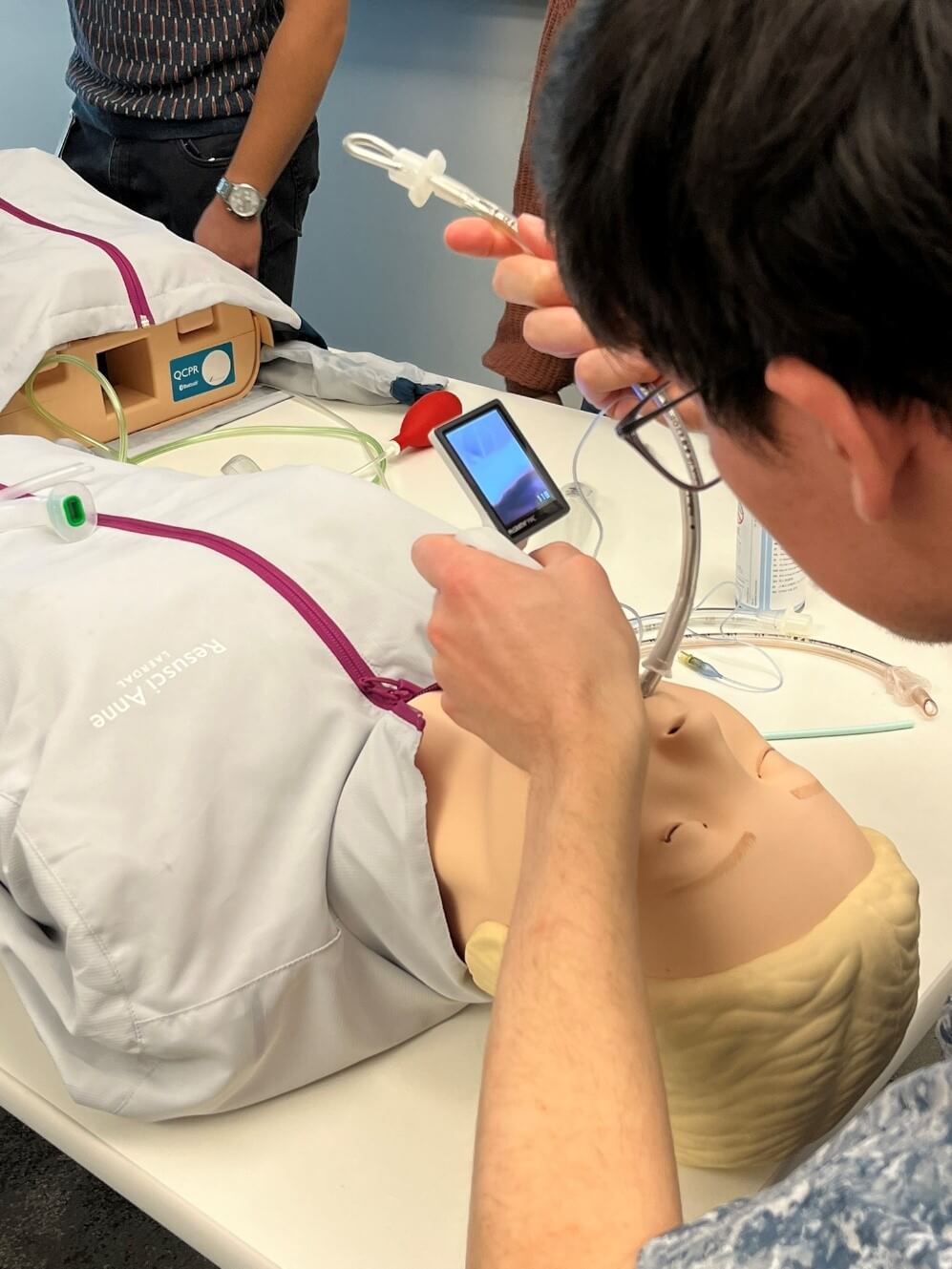
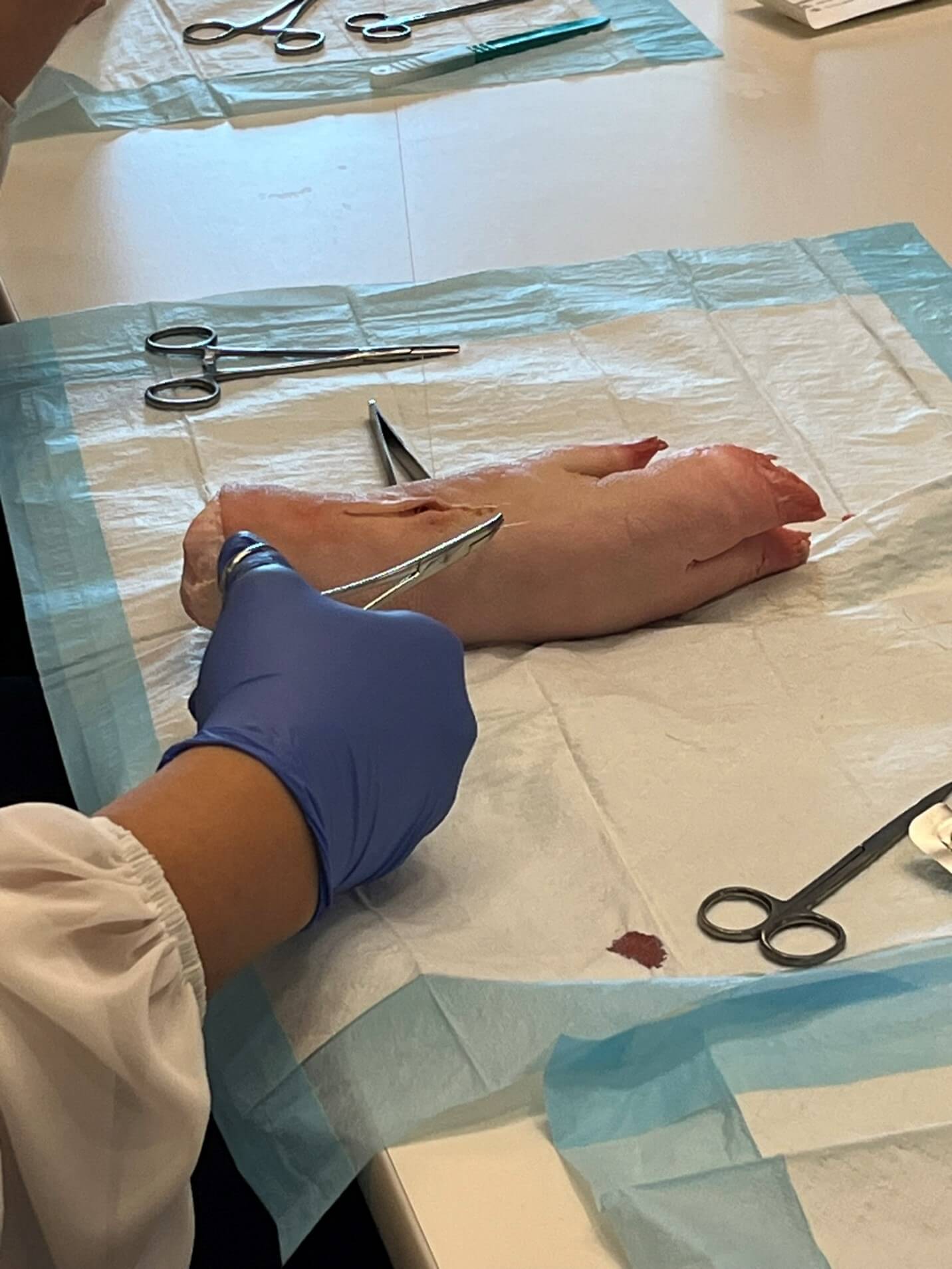
Following dinner, students checked into the hotel in Selkirk and prepared for an early start on Saturday morning at Selkirk Regional Health Centre. Students were split into groups to rotate through four clinical interactive stations. Dr. Phoebe Thiessen (family physician and the IERHA’s Regional Medical Obstetrics Lead) walked students through the obstetrical and gynecology station; Dr. Nadurak showed students the ultrasound station; Dr. Alexander the intubation/airway station; and Dr. Rita Costa (IERHA family medicine resident), the suturing station. Following the rotations, students joined the physicians for an engaging question and answer period. The day wrapped up with a tour of Selkirk Regional Health Centre hosted by Dr. Ian Alexander.
Students expressed appreciation for the opportunity to interact with experienced physicians and for the learning opportunities. A few indicated they would have liked to have had more time exploring Selkirk. According to Pamela Robertson, IERHA’s physician recruiter, the feedback is heartening for physicians who invest in making RIG a worthwhile venture for students.
“Our sincere thanks to Dr. Costa, Dr. Nadurak and Dr. Alexander and his team for spending time with the students,” says Robertson. “Dr. Young travelled from Eriksdale to have dinner with this group and Dr. Phoebe Thiessen provided support throughout the day. We look forward to next year’s RIG trip!”
Community members who want to get involved in rural physician recruitment and who have suggestions on destinations or events for students or residents, please contact Pamela Robertson, physician recruitment at [email protected]
Allied health teams support care in every corner of Manitoba and touch the lives of nearly every Manitoba family. The unique skills and diverse roles of allied health professionals cover the full range of preventive, diagnostic, treatment, and technical services, supporting Manitobans at every stage of their care journey.
Audiologist in Beausejour serves Interlake-Eastern communities
It’s National Nursing Week, which aims to recognize the contributions of nurses to individuals, communities and the future of health care.
This year, National Nursing Week runs from May 6 to 12 with the theme “Changing Lives. Shaping Tomorrow.”
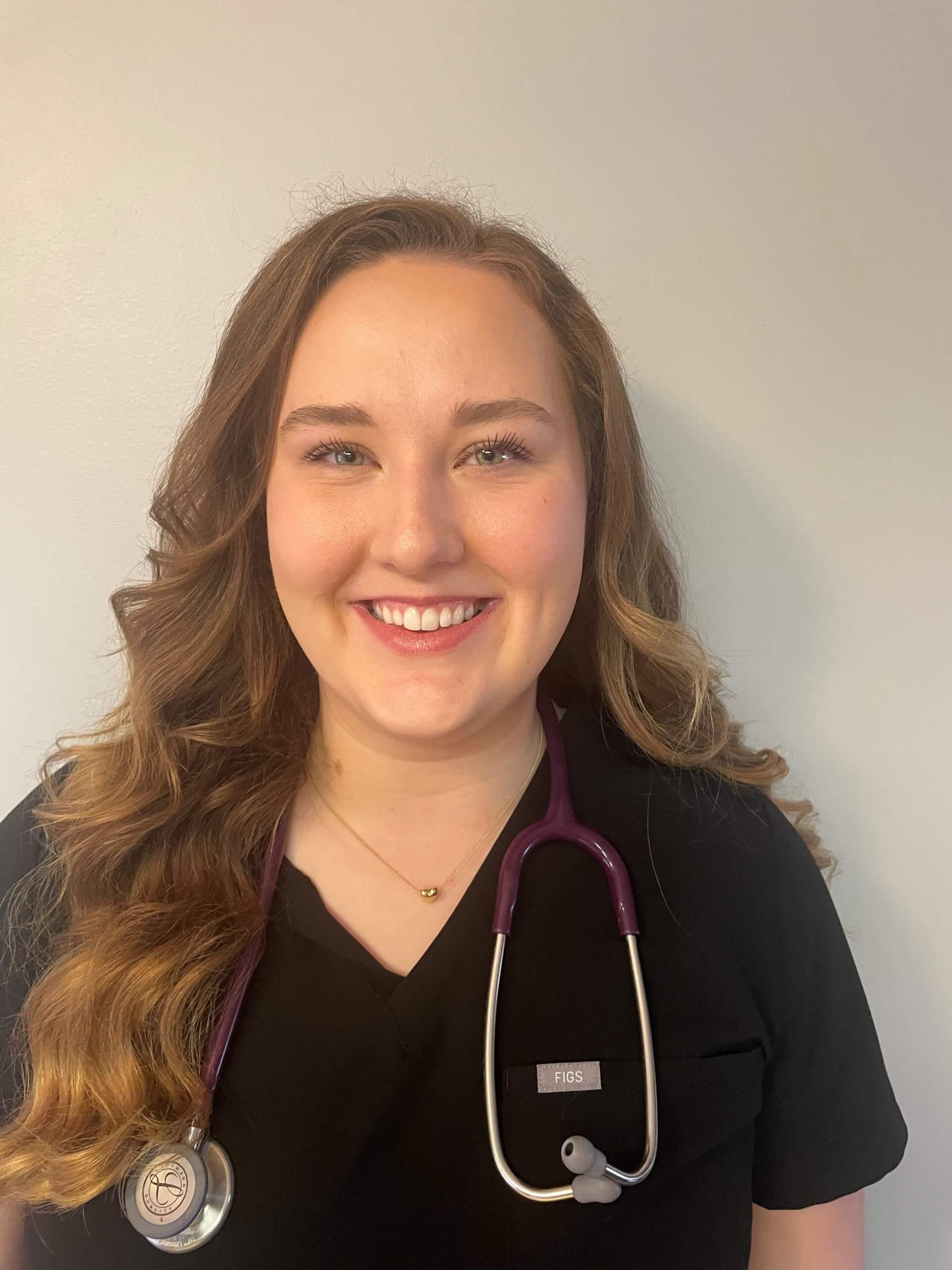
Tayler Nickart
Newly graduated nurse Tayler Nickart looks forward to embarking on a career that will help change lives positively and shape the future.
Tayler graduated in February after completing her bachelor of nursing degree at Red River College Polytechnic. Soon after, she obtained her registered nurse license.
“I have always really been drawn to the medical field and the constant lifelong learning and diverse variety of jobs and paths the career provides. I loved the idea of being able to care for people in times of need to help them achieve good health outcomes and make a difference in their lives,” she said.
“I also was a very clumsy kid who played many sports that made several visits to the hospital for various fractures, stitches and sprains. I have always admired and appreciated the compassionate and exceptional care of nurses I had that made me want to do the same work.”
Tayler got a jump start on her career journey as a nursing student in the Home for the Summer program at Selkirk Regional Health Centre (SRHC). This program offers summer employment opportunities for post-secondary students pursuing studies in nursing, pharmacy and allied health fields.
“I was very fortunate to be able to travel to several different long-term care facilities throughout the region and experience health-care settings in rural areas,” she said.
“This position provided exceptional knowledge on many aspects of nursing — more than just direct patient care, such as infection control, charting, developing therapeutic relationships with patients, assessing and analyzing patient safety and satisfaction of their care — along with shadowing nursing practice early on in my studies.”
While she was studying, Tayler also held an undergraduate nursing employee position for about a year and a half on the surgical unit at SRHC. Undergraduate nurse employees work under the supervision of registered nurses or registered psychiatric nurses care to gain experience and log working hours.
“I feel incredibly lucky to have had the opportunity to put my education to practise and strengthen my nursing skills and judgment prior to graduation,” she said. “Clinical practice in nursing school is often limited with short rotations so you may not get to attempt all nursing skills.”
As an undergraduate nursing employee, Tayler had the chance to hone her skills within an interdisciplinary health-care team, all while being supported by an experienced nurse.
“This employment gave me so much experience with a vast variety of patients — and being able to work alongside the health-care team was extremely rewarding,” she said. “The staff on the SRHC surgery unit were beyond welcoming and supportive, and I am so lucky to have that opportunity prior to becoming a registered nurse.”
In April, Tayler began employment as a registered nurse at SRHC’s emergency department.
“I have really enjoyed the first month of my employment and getting to know the emergency team. I am most looking forward to take on the challenges of becoming an emergency RN and learning from the incredible nurses and staff that work at the SRHC facility. I feel grateful to be able to have grown so much in my nursing practice throughout my time working in IERHA and to now be able to begin my career,” she said.
“I have grown up and lived in the surrounding Selkirk area my entire life and am very much looking forward to being able to give back to the community that helped me to get to where I am today.”
And for others who might be considering a career in nursing, Tayler offers some words of encouragement.
“It is incredibly rewarding to work with people in times of need and support them in any way you can, as well as care for their families and communities,” she said. “Nursing is a career that will teach you so many things and you learn something new each day.”
Tayler Nickart, nurse at Selkirk Regional Health Centre
Peguis nurses bring care into community
As health director for Peguis First Nation, Doris Bear manages over 80 staff including 14 nurses. There is one thing that binds them all and that influences their care for their clients.
“The important piece of the team is the communication. Nurses all collaborate and work well together. We are working towards improvement and having a heathy community,” Doris said. “Community members look forward to their visits. Our reserve is so widespread. . .they know the issues with each of the clients that they serve.”
One of the nurses on Doris’ team is Charmaine Raynor, home and community care coordinator in Peguis. Prior to becoming an LPN, she worked as a health care aide alongside nurses in Peguis and Fisher Personal Care Home. The work of her nursing colleagues got her interested in the profession but it was her mother’s cancer diagnosis 20 years ago and the care Charmaine provided to her that propelled her to nursing school in her late 30s.
“I had my aha moment. I give this all to my mother where I am today. She gives me my strength and my push,” Charmaine said.
That push into nursing has put Charmaine on a pathway to leadership and advocacy. She oversees four other LPNs and four health care aides as they deliver services for elders, help people manage chronic disease diagnoses and support palliative care. She has recently completed the management development certificate at Red River College Polytechnic (RRC Polytech) and is the southern co-chair representative at the Southern Tribal Council Independent Home and Community Care Committee. In this role, she works with representatives from the First Nations and Inuit Health Branch and Indigenous Services Canada. It’s an opportunity for her to network, collaborate and advocate.
“Living in a community that has a lot of crisis still to this day, I know firsthand and at a grassroots level what our needs are,” Charmaine said. “The whole goal is taking care of people and the community as a whole-their whole wellbeing in whatever way we can as a group. It’s a rewarding feeling at the end of the day. You know you helped somebody. That’s a very fulfilling feeling and very purposeful.”
Another member of Doris’ nursing team is Denise Bear, nurse in charge in Peguis.
She graduated fromRRC Polytech’s inner city nursing program designed to support students with families as her daughter was young at the time.
“I’ve always felt like I have a caring compassion side. It hurts when I see people hurting. I’ve always been interested in science and learning-how the body works and gaining theory. I found it interesting and challenging,” Denise said.
She returned to Peguis to work at Percy E. Moore hospital for six years and moved into community health when Peguis had an opening. In her role, she works with a team of five LPNs, three community health representatives and one nursing assistant. Denise is also a part of Manitoba Indigenous Nurses Inc. a professional association of nurses who work to address the nursing issues impacting their communities. They work together to address issues like the impact of nursing/human resources shortages, wage parity and workforce development training initiatives.
She has witnessed advancements in the profession.
“Ten years ago, LPNs were very limited in what they could do. With nursing shortages and with COVID, we’ve been granted extra duties to perform and training to fulfill more functions,” Denise said. She points to the successful integration of testing into the work of LPNs.
“We’re taking on more programming provided in nursing stations under direction of doctors. In our community, if someone comes into the health centre we’ll treat, test and do contact testing. If results are positive, we have all that information already. It’s really hard to get people in to see the doctor. We weren’t able to catch people and treat them right away. Now we’re capturing more to be treated and they are treated more quickly. That seems to work out better.”
She is in the process of completing the First Nations Community Management Diploma program at Yellowquill University College that is further developing her management skills. The training and her experience have made her grateful for the team that she works with.
“Congratulations to all nurses! I wouldn’t be able to do this job if I didn’t have such a good team to depend on. I know that I can ask them to do something for the community or for our program and they will get it done. I work alongside them, I don’t expect them to do anything I can’t do,” Denise said.
As the population of Peguis grows, Denise is seeing an increase in workload for health care staff. Peguis too is looking to encourage more people to pursue careers in health care and she readily advises people to consider nursing.
“There are lots of career options – hospital, community health, travel there is never a shortage. It’s such a need everywhere. If they have a nice soft heart and they are caring for people, nursing is a good fit for that.”
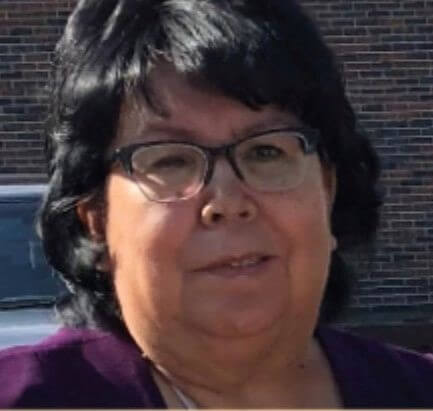
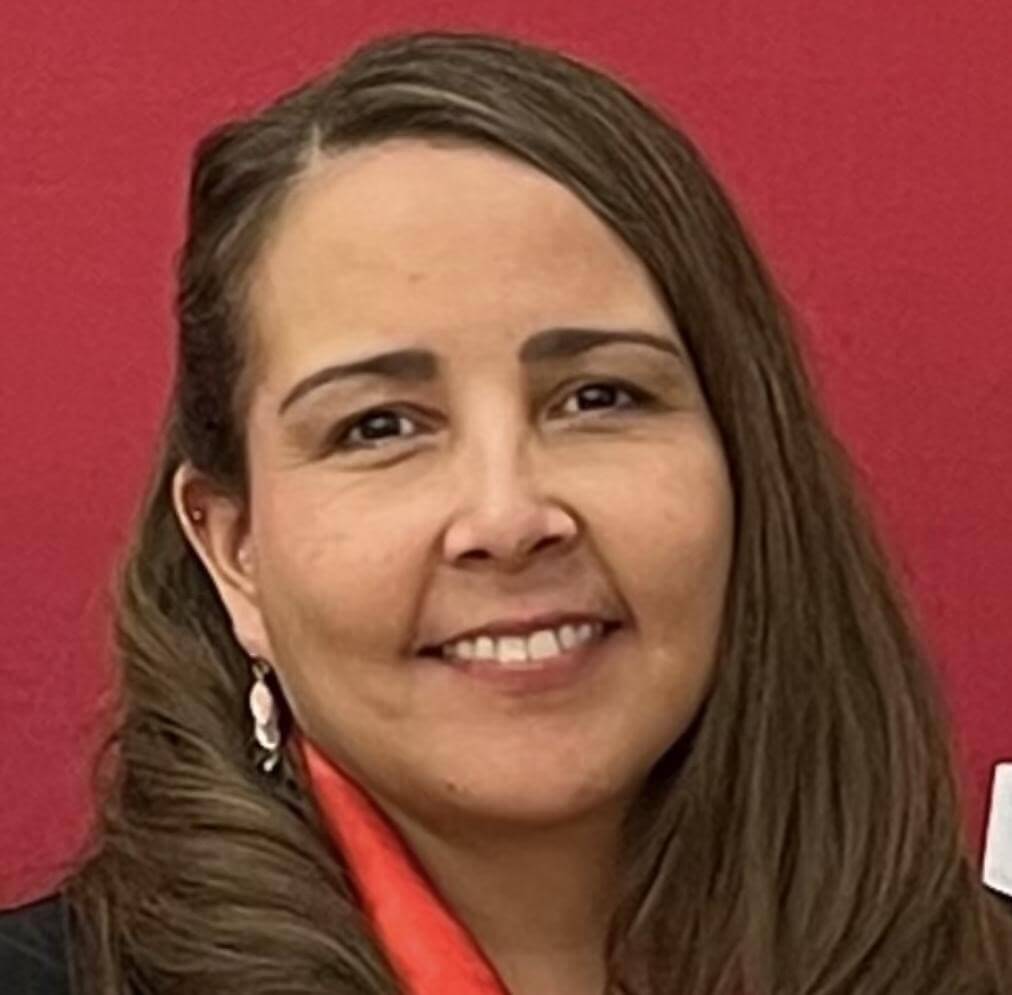
Doris Bear, Health Director for Peguis First Nation
IERHA Launches Poster contest for Truth and Reconciliaton Day later this year
September 30 marks National Day for Truth and Reconciliation. The day honours children who never returned home and Survivors of residential schools, as well as their families and communities. Public commemoration of the tragic and painful history and ongoing impacts of residential schools is a vital component of the reconciliation process.
To acknowledge this day, Interlake-Eastern Regional Health Authorityis seeking poster submissions designed by a youth resident of the region.
This contest is now closed.
Designs must be original and sized for 8.5” x 11” sheet of paper
Designs may be redrawn digitally for print.
This contest is open to employees of Interlake-Eastern RHA and their immediate family members/relatives as well as eligible residents of
Interlake-Eastern RHA.
All submissions will become property of Interlake-Eastern RHA.
Winner will receive $100.
More than one award may be granted if multiple winners are selected.
Two Physicians Awarded in Interlake-Eastern RHA
Interlake-Eastern RHA recognized two physicians with physician emeritus awards last night at the region’s annual spring physician dinner at the Selkirk Golf and Country Club.
Physician colleagues and community members had the chance to nominate award recipients, Dr. Eric Stearns and Dr. Greg Pinniger, in recognition of exemplary service and expertise to community.
Dr. Charles Penner, Interlake-Eastern RHA’s regional lead of medical services and chief medical officer, congratulated this year’s recipients for their achievements.
“It brings me great pleasure to recognize my physician colleagues, Dr. Eric Stearns and Dr. Greg Pinniger, for their contributions to health care in the Interlake-Eastern region,” Dr. Penner said.
“We are privileged to have such dedicated professionals serving our communities.”
Dr. Stearns said receiving the Physician Emeritus Award is the top honour. He graduated from medical school at the University of Manitoba in 1978 and finished his residency in obstetrics and gynecology five years later. He began practising at the Manitoba Clinic, while also working for the Northern Medical Unit and travelling to northern communities including Churchill, Rankin Inlet, Arviat, Coral Harbour, Baker Lake and Repulse Bay.
Over time, he shifted his focus to offer care in Hodgson and Fisher River. At the same time, he spent more than 25 years in Selkirk performing surgery and providing clinical care. He also ran a private practice in Selkirk for two years. Today, Dr. Stearns continues to do surgical assisting in Selkirk.
He also serves as a physician advisor for the College of Physicians and Surgeons of Manitoba (CPSM) and is a past-president for CPSM. In addition, he chaired the perinatal maternal health standards committee at the CPSM for many years and worked as a consultant on the Manitoba Physician Achievement Review program. He continues to work with CPSM’s quality improvement program.
Adding to his varied experience, Dr. Stearns was a department head at Seven Oaks General Hospital and served on multiple committees through Winnipeg Regional Health Authority and Interlake-Eastern Regional Health Authority, as well as holding the position of assistant professor in University of Manitoba’s department of obstetrics and gynecology.
With a global reach, Dr. Stearns taught the ALARM International Program in Guyana, Ethiopia and Tanzania. This program aims to reduce maternal and newborn mortality around the world. In Guyana, Dr. Stearns also reviewed the national obstetrical program for the government.
As he prepares to wrap up a career that spans more than four decades, Dr. Stearns expects that 2024 will be his final year of practice. Looking back, there’s much that he’s enjoyed over the decades.
“You can’t beat delivering babies, and I also love to teach,” he said. “And to go out with this award is awesome. It’s the highlight of my career. It really tops it off. This is amazing to me.”
Dr. Greg Pinniger also enjoys the variety he has experienced through his career in rural general practice.
Since 1992, Dr. Pinniger has served as a physician in Manitoba with four years in Killarney and 26 years at Stonewall Medical Clinic, along with work in the surgical intensive care unit at Health Sciences Centre. Outside of Manitoba, he did locums in Prince Edward Island and Alberta.
As a general practitioner, Dr. Pinniger said he enjoys “knowing a little bit about a lot of things.” He also appreciates that the duration of his career has allowed him continuity of care with his patients. By working alongside other dedicated and enthusiastic doctors, nurses, allied health professionals and administrators, Dr. Pinniger feels gratitude for individuals who comprise the care teams that health-care requires.
At the same time, Dr. Pinniger has enjoyed serving on Interlake-Eastern RHA’s medical advisory committee over the years. Looking ahead, he hopes other new physicians might pursue a similar path in rural general practice.
“I hope that rural and family medicine can one day recapture the attention of new medical graduates and entice them into a rewarding, challenging career — one where they can grow professionally and personally and one where they can feel truly needed by those that they serve,” said Dr. Pinniger, adding that coming to Stonewall was the highlight of his career.
As for being chosen as a recipient of the Physician Emeritus Award, Dr. Pinniger said it’s an honour — and a surprise.
“I’m just one of many people in the health-care system who try to do their best,” he said. “I appreciate the recognition given to me by my colleagues. It is touching and humbling.”